Contact Us
Get in touch to talk with us

Our Clientele - Family Offices, Corporates, NRI, UHNI, FPI
Since 1993
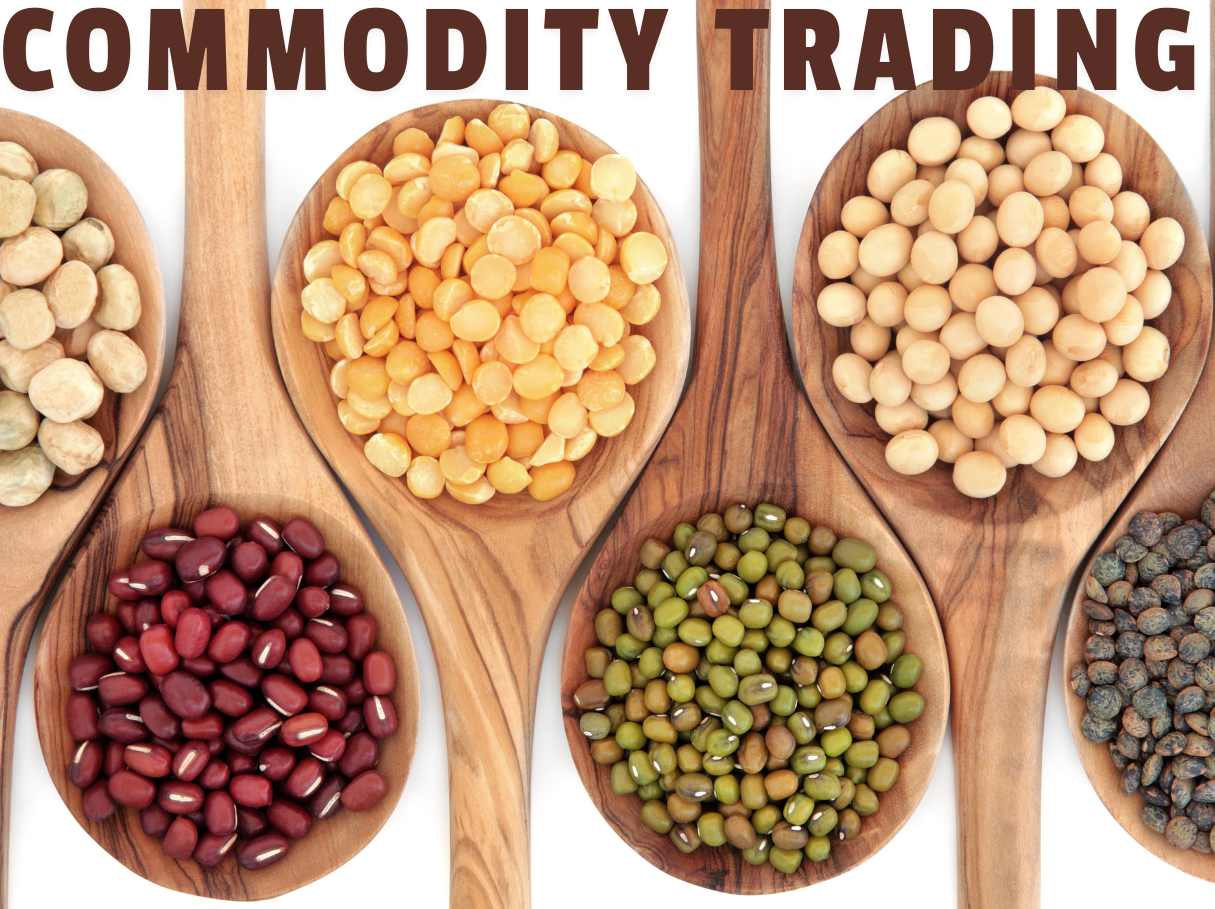
A commodity is a group of essential products used in daily life. The term "commodity" can refer to sustenance, energy, metals, etc. Remember that the nature of a commodity is to be exchangeable. Physically, commodities can be transferred from one location to another. What is commodity trading ? Even now, in villages, producers trade goods with one another. In the realm of organized commodity trading, certain distinctions exist. Among investors, commodity trading is regaining significance. This trading takes place on a commodities exchange, where various commodities derivatives are purchased and sold. Agricultural products and contracts founded on agricultural products are the most frequently traded items. But an increasing number of non-agricultural commodities, such as diamonds, steel, and energy products, are also traded. How can commodities be traded ? A tradable commodity can be purchased and sold in the same manner as stocks and shares. You purchase a commodity in anticipation of a future price increase. When the future price reaches the target, the asset is sold. This is the basic method of operation. Conversely, commodity sellers sell it when they believe there is no place for future price appreciation. What are futures on commodities ? In India, commodities are exchanged on either spot markets or futures markets. Spot markets facilitate the instantaneous exchange of commodities for currency. Observe commodity futures prices in real-time to comprehend price movement. In the commodity futures market, buyers and vendors trade a commodity based on a standard contract that considers future price. Futures contracts are transacted electronically and can be settled in cash. Can you obtain delivery for a commodity ? Futures contracts for commodities are agreements for the delivery of products. Delivery of products against commodity futures contracts is possible if the contract design includes sufficient delivery logic. Future prices in commodity futures are determined by bids and offers submitted by commodity dealers / traders / investors. What commodities are exchanged ? NCDEX allows trading in commodities such as barley, chana, maize, moong, paddy (basmati), kapas, 29 mm, cotton, guar seed 1 mt, guar seed 10 mt, guar gum, castor seed, cotton seed oilcake, soybean, refined soy oil, mustard seed, crude palm oil, sugar, pepper, turmeric, jeera, and coriander. The Multi Commodity Exchange of India Limited (MCX) facilitates the trading of bullion products (Gold, Gold Mini, Gold Guinea, Gold Petal, Silver, Silver Mini, Silver Micro), base metals (Aluminium, Aluminium Mini, Brass, Copper, Lead, Lead Mini, Nickel, Zinc, Zinc Mini), energy (Crude Oil, Crude Oil Mini, Natural Gas), and agricultural products (Black Pepper, Cardamom, Castor Seed, Cotton, Crude Palm Oil, Menth. In addition to agricultural products, plantation (rubber), and fiber (jute), the ICEX also facilitates trading commodities such as diamonds and steel. What are the trading hours of commodities ? The trading hours of the commodity exchange are IST 10:00 am to 11.30 pm / 11.55 pm Monday through Friday. During trading hours, you can observe all the real-time actions regarding commodity futures. What are the commodity markets ? The National Commodity & Derivatives Exchange Limited (NCDEX), The Multi Commodity Exchange of India Limited (MCX), and The Indian Commodity Exchange Limited (ICEX) are commodity exchanges in India. ICEX and the National Multi-Commodity Exchange (NMCE) have amalgamated. Positives & Negatives of commodity trading Commodity futures are highly leveraged investments, meaning you can place a larger order with relatively small capital. Generally, commodity futures markets are highly liquid, making entry and exit simple. Futures on commodities have the potential to yield enormous profits if they are traded carefully and intelligently. Market volatility, which increases risk, is one of the disadvantages of trading commodity futures. Investing directly in commodity markets is risky, particularly for novice investors. So, be cautious. Leverage magnifies gains and losses, so you win large or lose big. What other costs are associated with commodity trading ? Traders pay the commodity transaction tax (CTT). In the commodity sector, the GST is paid on brokerage fees associated with the physical delivery of products, exchange fees, and warehouse fees. There is stamp duty also. Who oversees commodity transactions in India ? The SEBI regulates commodity trading on the Indian market. The Department of Commodity Derivatives Market Regulation (CDMRD) is responsible for daily operations. Recently, the SEBI has permitted mutual funds and PMSs to trade in the segment for commodity derivatives. Conclusion Commodity trading is the exchange of essential products like agri-commodities, energy, and metals, traded on exchanges like NCDEX, MCX, and ICEX. In India, commodity trading is regaining significance as investors trade derivatives on commodity exchanges. Commodity futures are highly leveraged investments with potential for significant profits. Traders pay commodity transaction tax (CTT), GST, exchange fees, warehouse fees, and stamp duty. SEBI regulates commodity trading in India, overseeing daily operations and allows mutual funds and PMSs to trade commodity derivatives.
Get in touch to talk with us